
RPA Consulting
From Fragile Scripts to Enterprise Automation Strategy
Why Most RPA Initiatives Fail to Scale
RPA promises speed and efficiency, but many organisations experience fragile bots and ongoing maintenance challenges. Without a strategic, consulting-led approach, automation initiatives often struggle to deliver long-term value.
Process Inefficiency
Are you accelerating a broken process? Automating an inefficient workflow produces poor results instead of solving underlying operational problems.
The Maintenance Trap
Is your team spending excessive time fixing bots whenever websites or applications change, turning automation into an ongoing maintenance burden?
Shadow IT Governance
Are employees building their own unofficial bots or tools, creating shadow IT environments that introduce security risks and fragmented data silos?
Adoption Resistance
Are employees resisting automation initiatives because they fear job loss rather than understanding how automation can support their daily work?
The Strategic Benefits of Value of Managed Automation
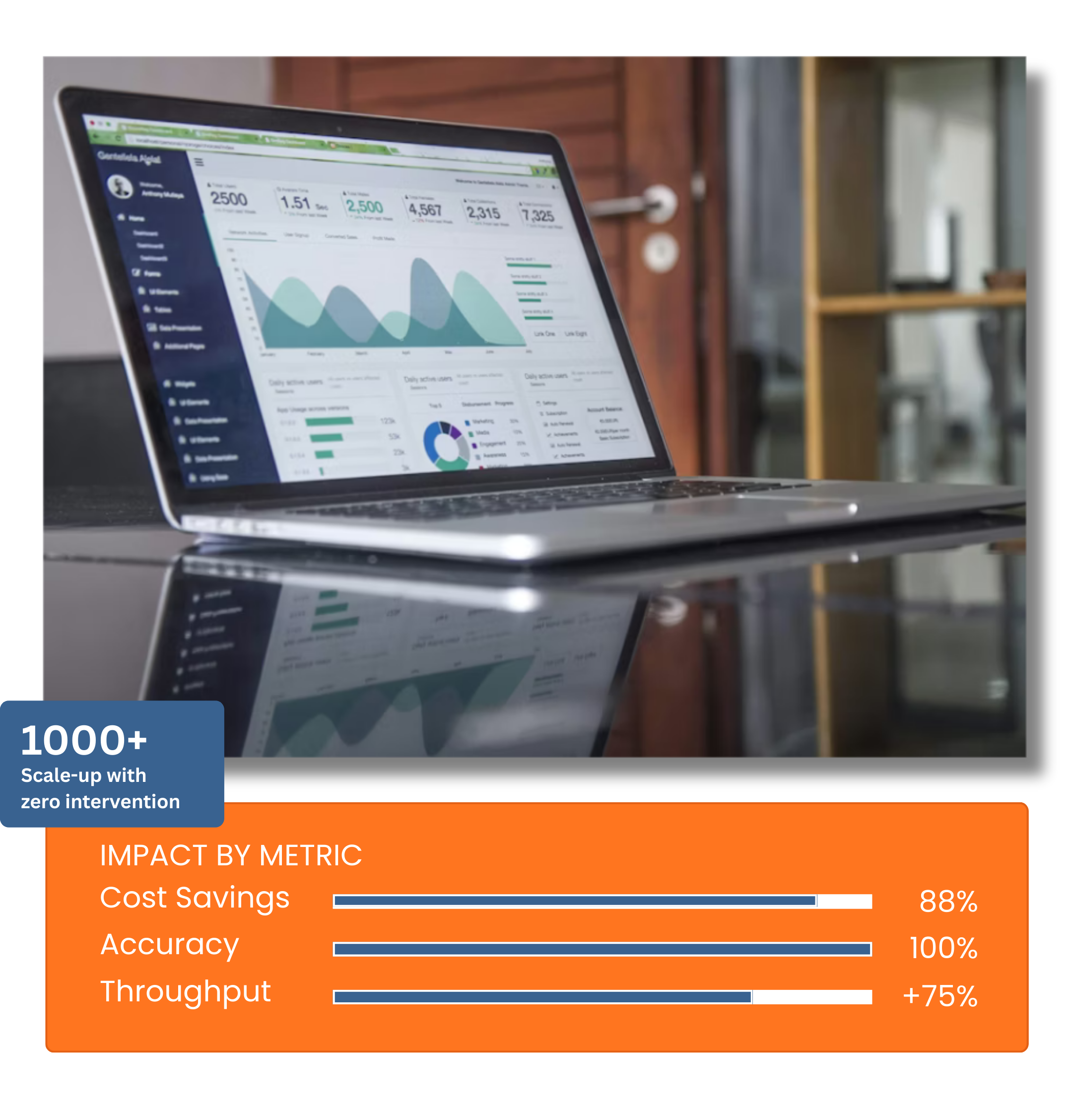
- Scalability: Our modular architectures let you go from one pilot bot to hundreds across departments without destabilising your operations.
- Cost Reduction: By first targeting high-volume, low-complexity tasks, we reduce operational costs of manual labour and achieve a one-month ROI.
- Improved Accuracy: Our digital workers reduce human error on data-intensive tasks and perform 100% consistent compliance checks and data entry.
- Employee Focus: We manage the “Change Management” aspect, helping your staff transition from mundane data processors to strategic analysts who leverage automation to drive value.
End-to-End RPA Advisory & Implementation Services
Assessment & Strategic Roadmap
- Feasibility Analysis: We audit your workflows (Admin, Billing, CS) to see which processes can be automated & which need re-engineering.
- ROI Calculation: A clear cost-benefit analysis of creating automated solutions begins to ensure that each bot solution pays for itself.
Process Modelling & Design
- Workflow Optimisation: We map your current state detailedly to identify bottlenecks and redundancies, and processes are standardised to ensure the bot follows the most efficient path possible.
- Solution Architecture: Designing resilient bot frameworks to handle exceptions like “What happens if the website goes down?” without crashing the workflow.
Implementation & Integration
- Seamless Connectivity: Whether it is a legacy mainframe, a modern SAP ERP or a web-based CRM, we build bots that connect incompatible systems.
- Secure Deployment: Deploying enterprise-grade security standards to ensure that all of the Bots’ interactions with credentials and sensitive data (PII) are secure.
Training & Change Management
- Internal Capability Building: We train internal “RPA Champions” within your organisation to manage, monitor, and support basic bot operations and automation workflows.
- Transition Support: We help manage the cultural shift, demonstrating to employees how bots are there to eliminate their drudgery, not their jobs.
Managed Support & Maintenance
- 24/7 Monitoring: Our control centres watch your digital workforce. If a bot fails or a target application changes, we are alerted instantly.
- Continuous Optimisation: We regularly review bot performance metrics to refine logic and increase execution speed over time.
Consulting Success Across Verticals
Financial Services
Automated Reconciliation of financial services; Know your customer(KYC); loan process workflow.
Healthcare
Patient appointments for healthcare; automated claims processing for healthcare; and automated updating of medical records.
Logistics & Supply Chain
Order entry in logistics/supply chain; automatic update of shipments in logistics/supply chain; and automated reports on inventory levels.
Insurance
Claims adjudication for insurance, and notification of renewals for policies in insurance.
Strategic Discipline Over "Quick Fixes"
- Process-First Philosophy: We are completely transparent in our approach. We will never recommend automating something if it doesn’t need to be automated. Our first step is to fix the workflow, then bring in technology to support it.
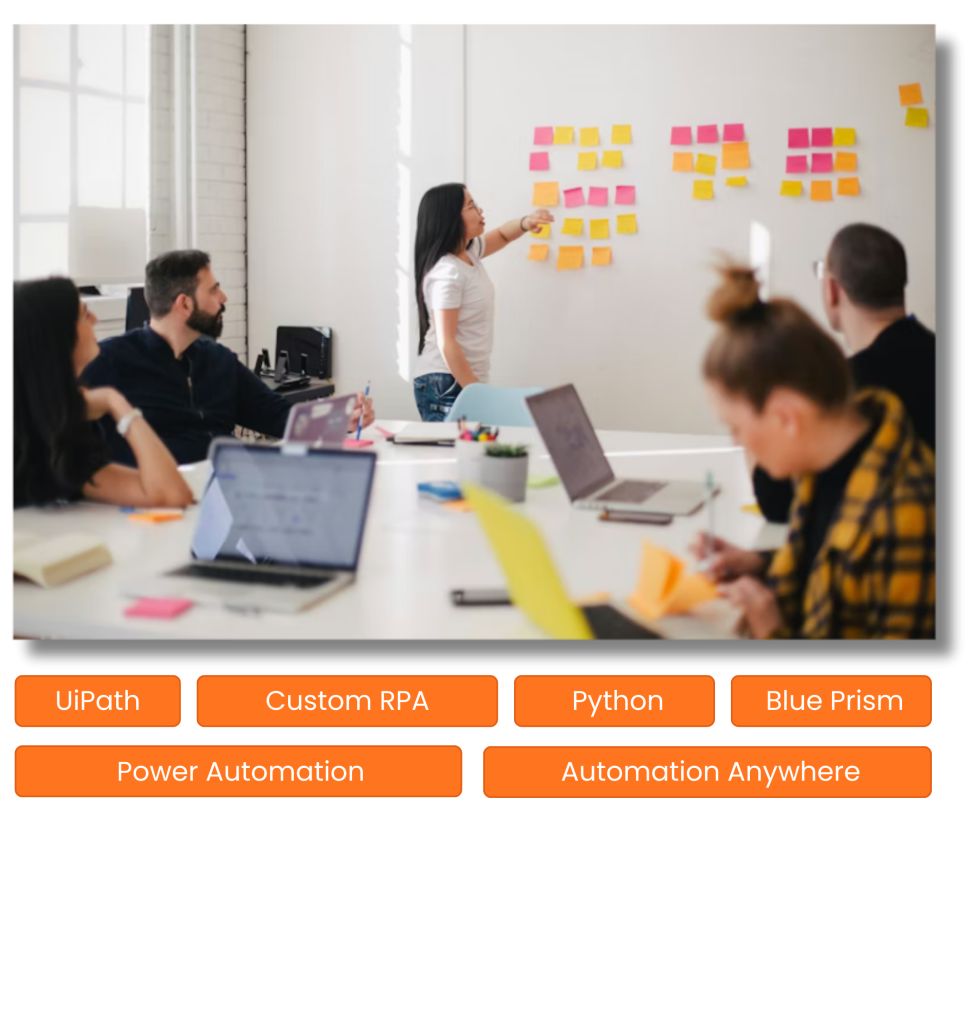
- Vendor Agnostic: Get unbiased recommendations with the best tools available for your use case. This could include UiPath, Microsoft Power Automate or even a custom solution using Python.
- Long-Term Partnership: Our goal is to establish a lasting partnership with our clients over time. We consider ourselves your company’s Centre of Excellence (CoE) for automation. As your company continues to grow and evolve, so will our partnership and your digital workforce.
Frequently Asked Questions
What is an RPA consultant?
Will RPA be replaced by AI?
What are the three types of RPA?
The three primary modes of automation we deploy are:
- Attended RPA: Bots that live on an employee’s desktop and act as a virtual assistant, triggered by the user to speed up tasks like form filling.
- Unattended RPA: Bots that run independently on a server, handling background processes like nightly batch invoicing without human interaction.
- Hybrid RPA: A combination where humans and bots pass tasks back and forth for maximum efficiency.
How long does it take to see ROI from RPA?
RPA offers one of the fastest returns in the technology sector. While complex enterprise transformations take time, we typically target “Quick Wins”—high-volume, low-complexity processes—that can be deployed in weeks, often delivering a full Return on Investment (ROI) within 6 to 9 months.